What is COPD?
COPD (Chronic Obstructive Pulmonary Disease) is a long-term lung condition in which airflow becomes limited and breathing becomes difficult over time.
It may manifest as:
- Chronic bronchitis (long-standing cough with phlegm)
- Emphysema (damage to air sacs in the lungs)
COPD is a chronic lung condition. And while established COPD cannot usually be reversed, appropriate treatment, smoking cessation, physical activity, vaccinations and Pulmonary Rehabilitation can reduce symptoms, lower the risk of exacerbations and improve quality of life.
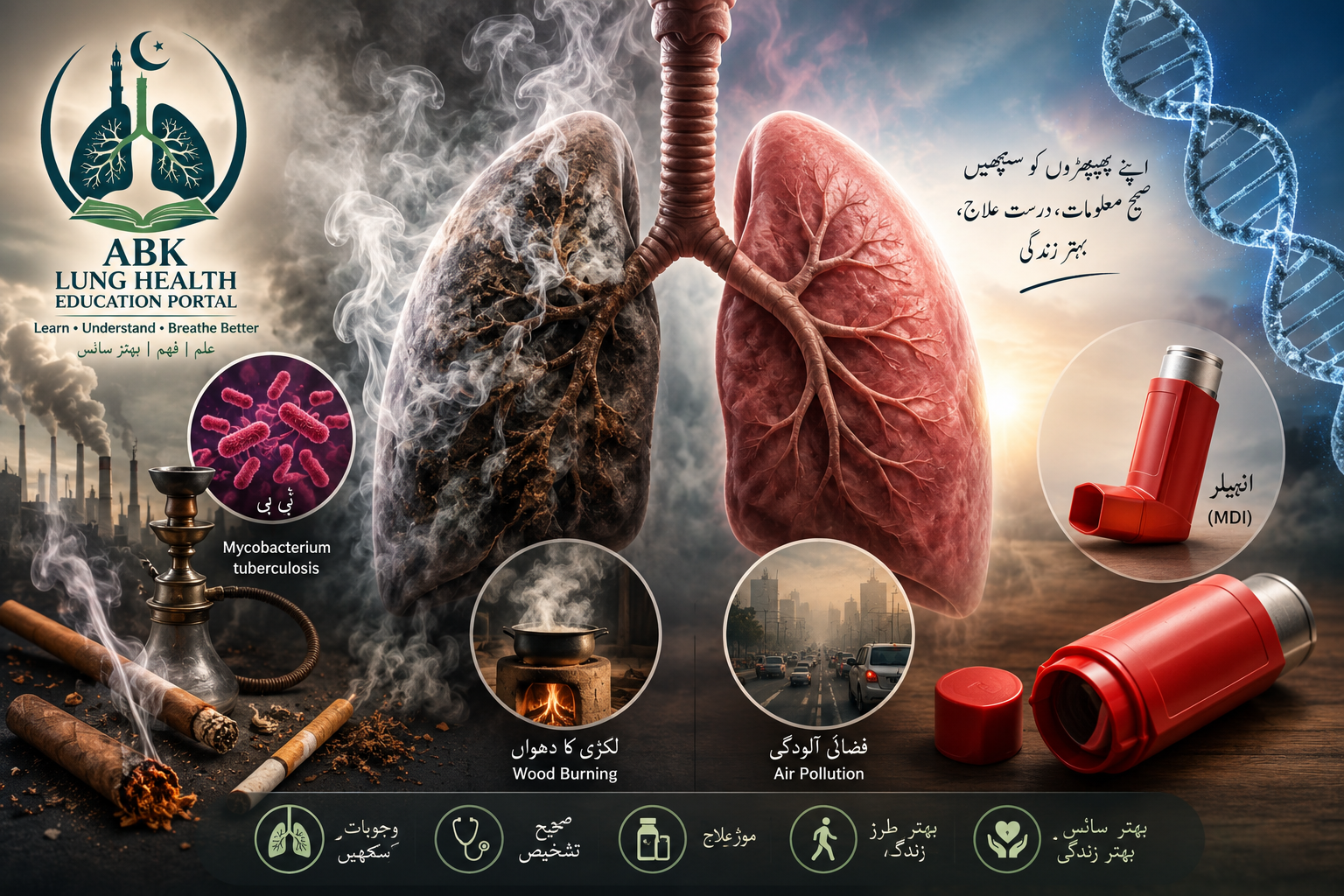
🚬 Risk factors and Contributors to COPD
| RISK FACTOR | LABEL | ACTION NEEDED |
|---|---|---|
| 🚬 Cigarette, Huqqa, Sheesha, Chillum | COPD-C | 🚭 Smoking Cessation |
| 🔥 Wood burning, indoor smoke | COPD-P | 🍽 Switch to gas stoves, electric stoves, or induction stoves. |
| 🦠 Childhood infections, previous Tuberculosis | COPD-I | 🩺 Regular checkup, timely treatment |
| 🌳 Long standing Asthma | COPD-A | Optimize Asthma |
| 🧬 Genetic Causes | COPD-G | 👨🏫 Genetic Counselling |
| 👶 Premature birth, low birth weight | COPD-D | - |
📌 Common Symptoms
Common symptoms that one may suffer becuase of COPD include:
- Shortness of breath (especially on walking)
- Chronic cough
- Phlegm / sputum
- Wheezing
- Frequent chest infections
- Tiredness
Symptoms often worsen gradually, which is why many patients ignore them early.
Also remember that these are non-specific symptoms and may be caused by other diseases as well. That is why you may want to visit the clinic before you have a final diagnosis.
🔥 What Makes COPD Worse?
Even when you have COPD, these triggers can make it worse, even may require hospital admissions.
- Smoking or second-hand smoke
- Respiratory infections
- Cold weather
- Air pollution
- Skipping inhalers
- Improper inhaler technique
So, do your best to avoid all of the above.
💊 Treatment Basics
COPD cannot be cured, but it can be controlled.
Treatment usually includes:
✔ Inhalers to open airways
✔ Regular daily medicines
✔ Vaccinations (flu, pneumonia) - Set yearly reminders for October
✔ Pulmonary rehabilitation / exercise - visit physiotherapist
✔ Oxygen therapy (in advanced cases)
👉 Medicines work best only if inhalers are used correctly.
Inhaler Technique
All 1st line medication in COPD are usually delivered through the inhalational route. Mastering the technique of the inhaler prescribed to you is one of the most important step you can take to control your asthma. I hope to have similar videos on every type of inhaler soon on my portal for your convenience.
How to use a metered-dose inhaler
A step-by-step video showing how to use a metered-dose inhaler correctly. Good inhaler technique helps ensure that your medicine reaches your lungs properly.
How to use a metered dose inhaler - (pump, inhaler) - by American Lung Association
How to use an inhaler with a spacer
Learn how to use a metered-dose inhaler together with a spacer (valved holding chamber). A spacer can make it easier to inhale the medicine correctly and help more of the medicine reach your lungs.
Nebulizer - use and care
A nebulizer is a machine used to generate aerosols for facilitated delivery of medicine straight to the lungs. If you have been prescribed a nebulizer either in regular usage or as per requirement needs, you would surely benefit from this guide by the European Lung Foundation.
Nebuliser and inhaler guide - European Lung Foundation
This video guide by American Lung Association (ALA) is also a good guide for first time users.
How to properly use a nebulizer - by American Lung Association
ALA also has a video on how to clean your nebulizer regularly. A nebulizer never cleaned can accumulate germs that may pass into the lungs with the aerosol.
How to clean the nebulizer - by American Lung Association
Prevention of Exacerbations
Exacerbations can be prevented by
- Avoiding triggers
- Avoiding air pollution
- Timely vaccinations.
Keep an eye on AQI
<div name="airvisual_widget" key="6a643d802a5d3d8e6a6bade4"></div>
<script type="text/javascript" src="https://cdn.airvisual.net/assets/widgets/widget_v3.0.js"></script>
Poor air quality can irritate your lungs and make breathing problems worse, especially if you have asthma, COPD, allergies, or other respiratory conditions.
- 🏠 Stay indoors as much as possible, especially during the hottest part of the day.
- 🚶 Avoid strenuous outdoor activities such as jogging, cycling, or heavy exercise.
- 🚪 Keep windows and doors closed if outdoor air quality is poor.
- 😷 If you must go outside, consider wearing a well-fitting N95 or KN95 mask, particularly during smoke or severe pollution events
- 💊 Continue taking your prescribed inhalers and medications. Do not stop them because you feel well
- 💨 Keep your reliever inhaler with you.
- 🚭 Avoid smoking, second-hand smoke, and burning wood or rubbish, which further worsen indoor air quality
- 🚗 If travelling, use your vehicle’s recirculation mode when driving through heavy traffic.
- 🚨 Seek medical attention promptly if you develop severe breathlessness, chest pain, blue lips, confusion, or if your reliever inhaler is not providing the usual relief.
UNDERSTANDING THE AIR QUALITY INDEX (AQI)
🟢 Good (0–50): Outdoor activities are generally safe.
🟡 Moderate (51–100): Most people can continue normal activities. Sensitive individuals should monitor symptoms.
🟠 Unhealthy for Sensitive Groups (101–150): People with asthma, COPD, heart disease, older adults, pregnant women, and young children should reduce prolonged outdoor activity.
🔴 Unhealthy (151–200): Everyone should limit prolonged outdoor exertion. People with lung disease should stay indoors whenever possible.
🟣 Very Unhealthy (201–300): Avoid outdoor activities. Keep windows closed and follow your doctor’s advice.
🟤 Hazardous (301+): Remain indoors if possible, avoid all outdoor exertion, and follow local public health advice.
📚 Learn more about COPD
Other reliable organisations also have resources for people with COPD. Further reading and learning can be pursued by visiting their websites. Following are resources accumulated from the internet for further reading.
Chronic Obstructive Pulmonary Disease (COPD)|Symptoms & Treatment|ELF
مزمن انسدادی مرض کیا ہے؟
مزمن انسدادی پھیپھڑوں کا مرض (سی او پی ڈی) پھیپھڑوں کی ایک طویل مدتی بیماری ہے، جس میں وقت کے ساتھ ہوا کے بہاؤ میں رکاوٹ پیدا ہوتی جاتی ہے اور سانس لینے میں دشواری ہونے لگتی ہے۔
اس کی صورتیں درج ذیل ہو سکتی ہیں:
- مزمن التہابِ قصبات {Chronic bronchitis} (طویل عرصے سے کھانسی کے ساتھ بلغم آنا)
- نُفاخ {Emphysema} (پھیپھڑوں میں موجود ہوا کی تھیلیوں (اسناخ، alveoli) کو نقصان پہنچنا)
یہ انسدادی بیماری پھیپھڑوں کی ایک دائمی بیماری ہے۔ اگرچہ ایک مرتبہ اس بیماری کے مستقل طور پر قائم ہو جانے کے بعد اسے عموماً مکمل طور پر ختم نہیں کیا جا سکتا، لیکن مناسب علاج، تمباکو نوشی ترک کرنا، جسمانی سرگرمی، حفاظتی ٹیکہ جات اور تنفسی بحالی (Pulmonary Rehabilitation) علامات کو کم کر سکتے ہیں، بیماری کے بگڑنے کے دوروں (exacerbations) کے خطرے کو کم کر سکتے ہیں اور معیارِ زندگی کو بہتر بنا سکتے ہیں۔
مزمن انسدادی مرض کے خطرے کے عوامل
| خطراتی عوامل | نام | ضروری کارروائی |
|---|---|---|
| 🚬 سگریٹ، حقہ، چِلَّم، شیشہ | COPD-C | ترک سیگریٹ نوشی |
| 🔥 لکڑیاں جلانا ، گھر کے اندر دھواں، ماحولیاتی آلودگی | COPD-P | گیس یا بجلی کے چولہوں پر منتقلی |
| 🦠 بچپن کے نمونیا، خصوصاََ تپ دق | COPD-I | باقاعدگی سے معائنہ، بروقت علاج |
| 🌳 طویل مدتی دمہ | COPD-A | دمہ کو قابو میں رکھنا |
| 🧬 جینیاتی وجوہات | COPD-G | جینیاتی مشاورت |
| 👶🏼 قبل از وقت پیدائش، کم پیدائشی وزن | COPD-C | …. |
عمومی علامات
مزمن انسدادی مرض کی وجہ سے جن علامات کا مریض کو سامنا کرنا پڑ سکتا ہے، ان میں زیادہ عام علامات یہ ہیں:
- سانس چڑھ جانا (خصوصاََ چلنے سے)
- دائمی کھانسی
- بلغم / ریشہ
- سانس میں سیٹی کی آوازیں آنا
- بکثرت چھاتی کے انفکشن
- کمزوری، بے ہمتی، تھکاوٹ رہنا
اس مرض میں علامات عام طور پہ وقت کیساتھ آہستہ آہستہ خراب ہوتی ہیں۔ اسی وجہ کئی مریض ان علامات سی اعراض کیے رکھتے ہیں یہاں تک کہ بیماری بگڑ جاتی ہے۔
یہ بھی یاد رکھیں کہ یہ علامات غیر مخصوص ہیں؛ بہت سے امراض میں اسی طرح کی علامات ہوتی ییں۔ یہی وجہ ہے کہ ان امراض کی تشخیص کے لیے آپ کو ماہر ڈاکٹر سے رابطے کی اور کلینک میں دکھانے کی ضرورت ہے۔
مزمن انسدادی مرض کو بگاڑنے والے عناصر
اگر آپ کو مزمن انسدادی مرض ہے، تب بھی یہ عوامل آپ کی بیماری کو مزید بگاڑ سکتے ہیں، اور بعض اوقات ہسپتال میں داخلے کی نوبت تک پیش آ سکتی ہے۔
- تمباکو نوشی یا دوسروں کے تمباکو کے دھوئیں کا سامنا
- سانس کی نالی میں جراثیم کی افزائش (انفیکشن)
- سرد موسم
- فضائی آلودگی
- مِنشقہ (انہیلر) استعمال نہ کرنا
- مِنشقہ استعمال کرنے کا طریقہ غلط ہونا
لہٰذا، حتیٰ الامکان ان تمام عوامل سے بچنے کی کوشش کریں۔ جلد ہی اس اداریے میں ان تمام امور سے متعلق علیحدہ مضامین ڈالے جائیں گے۔ ان شاءاللہ
💊 علاج کی بنیادی باتیں
اس مزمن انسدادی مرض کا مکمل علاج ممکن نہیں، لیکن اسے قابو میں رکھا جا سکتا ہے۔
علاج میں عموماً شامل ہیں:
✔ مِنشقہ کا استعمال — سانس کی نالیوں کو کھولنے کے لیے
✔ روزانہ باقاعدگی سے ادویات کا استعمال
✔ حفاظتی ٹیکہ جات (فلو، نمونیا) — ہر سال اکتوبر میں ۔ یاددہانی لگا لیں۔
✔ تنفسی بحالی / ورزش — فزیوتھراپسٹ سے رجوع کریں
✔ آکسیجن تھراپی (شدید یا ایڈوانسڈ بیماری کی صورت میں)
ادویات اسی وقت بہترین اثر کرتی ہیں جب مِنشقہ کا درست طریقے سے استعمال کیا جائے۔
مِنشقہ کا صحیح استعمال
مزمن انسدادی مرض کے علاج میں پہلی ترجیح کی تقریباً تمام ادویات عموماً سانس کے ذریعے (استنشاق، Inhalational route) دی جاتی ہیں۔ آپ کے لیے تجویز کردہ مِنشقہ (انہیلر) کو درست طریقے سے استعمال کرنا سیکھنا دمہ کو قابو کرنے کے لیے آپ کا سب سے اہم قدم ہے۔ امید ہے کہ جلد ہی آپ کی سہولت کے لیے اپنے پورٹل پر ہر قسم کے مِنشقہ کے استعمال کے طریقے کی اسی طرح کی ویڈیو اردو میں بھی دستیاب کر سکوں گا۔
مِنشقہ مقد٘رہ (میٹرڈ ڈوز انہیلر، MDI) استعمال کرنے کا طریقہ
مِنشقہ مقدرہ ایسا آلہ ہوتا ہے جس کے ذریعے دوا کی خاص مقدار ہی دباؤ کیساتھ ہر بار منتقل ہوتی ہے۔ اس ویڈیو میں مِنشقہ مقدرہ کو استعمال کرنے کا مرحلہ وار طریقہ دکھایا گیا ہے۔ مِنشقہ استعمال کرنے کا درست طریقہ کار اس بات کو یقینی بنانے میں مدد دیتی ہے کہ دوا مناسب مقدار میں آپ کے پھیپھڑوں تک پہنچے۔
مِنشقہ مقدرہ (میٹرڈ ڈوز انہیلر) استعمال کرنے کا طریقہ - (پمپ، انہیلر) - امریکہ ادارۂ پھیپھڑا
مِفساح (Spacer, Valve Holding Chamber) کے ساتھ مِنشقہ استعمال کرنے کا طریقہ
ِمنشقہ مقدرہ (میٹرڈ ڈوز انہیلر) کو مِفساح (Valved Holding Chamber) کے ساتھ استعمال کرنے کا طریقہ سیکھیں۔ مِفساح دوا کو درست طریقے سے سانس کے ذریعے اندر لینے میں آسانی پیدا کر سکتا ہے اور اس بات میں مدد دیتا ہے کہ پوری مقدار میں دوا آپ کے پھیپھڑوں تک پہنچے۔
— رذّاذہ (نیبولایئزر) کا استعمال اور دیکھ بھال
رذّاذہ ایک ایسا آلہ ہے جو دوا کو ارذاذ (ذرات میں تبدیل کرنا ، Aerosolization, l) کرتا ہے، تاکہ دوا کو براہِ راست پھیپھڑوں تک پہنچانا آسان ہو جائے۔ اگر آپ کو رذّاذہ باقاعدگی سے یا ضرورت کے مطابق استعمال کرنے کے لیے تجویز کیا گیا ہے تو یورپی ادارۂ پھیپھڑا کی یہ رہنما معلومات آپ کے لیے یقیناً مفید ہوں گی۔
رذّاذہ اور مِنشقہ کے استعمال کی رہنما معلومات —یورپی ادارۂ پھیپھڑا
امریکی ادارۂ پھیپھڑا کی یہ ویڈیو بھی پہلی مرتبہ رذّاذہ استعمال کرنے والوں کے لیے ایک اچھی رہنما ہے۔
رذّاذہ کے استعمال کا درست طریقہ — امریکی ادارۂ پھیپھڑا
اسی امریکی ادارے نے رذّاذہ کی باقاعدہ صفائی کے طریقے پر بھی ایک ویڈیو بنائی ہے۔ ایسا رذّاذہ جس کی صفائی نہ کی جائے، اس میں جراثیم جمع ہو سکتے ہیں جو دوا کے ارذاذ کے ساتھ پھیپھڑوں میں پہنچ سکتے ہیں۔
رذّاذہ کو صاف کرنے کا طریقہ _ امریکی ادارۂ پھیپھڑا
مرض کے بگاڑ سے بچاؤ
مرض کو بگڑنے سے بچانے کے طریقے یہ ہیں:
- مِنشقہ کا صحیح طریقہ استعمال
- بگڑنے کے محرکات سے بچاؤ
- ماحولیاتی آلودگی پر نظر
- حفاظتی ٹیکہ جات
ماحولیاتی آلودگی پہ نظر
فضا کا خراب معیار آپ کے پھیپھڑوں میں سوزش پیدا کر سکتا ہے اور سانس کی تکالیف کو بڑھا سکتا ہے، خصوصاً اگر آپ کو دمہ، مزمن انسدادی پھیپھڑوں کا مرض، الرجی یا سانس کی کوئی دوسری بیماری ہو۔
-
🏠 حتی الامکان گھر کے اندر رہیں، خصوصاً دن کے گرم ترین حصے کے دوران۔
-
🚶 باہر کی ایسی سرگرمیوں سے گریز کریں جن میں زیادہ مشقت ہو، مثلاً دوڑنا، سائیکل چلانا یا سخت ورزش کرنا۔
-
🚪 اگر باہر کی ہوا کا معیار خراب ہو تو کھڑکیاں اور دروازے بند رکھیں۔
-
😷 اگر باہر جانا ضروری ہو تو مناسب طور پر چہرے پر فٹ ہونے والا N95 یا KN95 ماسک پہننے پر غور کریں، خصوصاً دھوئیں یا شدید فضائی آلودگی کے دوران۔
-
💊 اپنے تجویز کردہ مِنشقہ (انہیلر) اور دیگر ادویات باقاعدگی سے استعمال کرتے رہیں۔ صرف اس وجہ سے انہیں بند نہ کریں کہ آپ خود کو بہتر محسوس کر رہے ہیں۔
-
💨 اگر آپ کو دمہ یا COPD ہے تو اپنی علامات میں فوری آرام دینے والے مِنشقہ (Reliever Inhaler) اپنے ساتھ رکھیں۔
-
🚭 سگریٹ نوشی، دوسروں کے سگریٹ کے دھوئیں، اور لکڑی یا کچرا جلانے سے گریز کریں، کیونکہ یہ گھر کے اندر ہوا کے معیار کو مزید خراب کرتے ہیں۔
-
🚗 اگر سفر کر رہے ہوں تو زیادہ ہجوم والے راستے سے گزرتے وقت گاڑی کے اندر باہر کی ہوا کا داخلہ بند کر دیں۔ (کھڑکیاں بند کردیں اور اے سی کو اندر کی ہوا گھمانے کا پابند کر لیں)۔
-
🚨 اگر سانس لینے میں شدید دشواری، سینے میں درد، ہونٹوں کا نیلا پڑنا، ذہنی انتشار (Confusion) پیدا ہو، یا علامات میں فوری آرام دینے والی مِنشقہ (انہیلر) معمول کے مطابق افاقہ نہ کر رہی ہو تو فوری طور پر طبی امداد حاصل کریں۔
ہوا کے معیار کے اشاریے (Air Quality Index I) کو سمجھنا
🟢 اچھی ہوا (0–50): عموماً باہر کی سرگرمیاں محفوظ ہیں۔
🟡 معتدل (51–100): زیادہ تر لوگ معمول کی سرگرمیاں جاری رکھ سکتے ہیں۔ حساس افراد اپنی علامات پر نظر رکھیں۔
🟠 حساس افراد کے لیے غیر صحت بخش (101–150): دمہ، COPD اور دل کی بیماری میں مبتلا افراد، عمر رسیدہ افراد، حاملہ خواتین اور چھوٹے بچوں کو زیادہ دیر تک باہر رہنے یا سرگرمی کرنے میں کمی کرنی چاہیے۔
🔴 غیر صحت بخش (151–200): ہر شخص کو زیادہ دیر تک باہر جسمانی مشقت سے گریز کرنا چاہیے۔ پھیپھڑوں کی بیماری میں مبتلا افراد حتی الامکان گھر کے اندر رہیں۔
🟣 انتہائی غیر صحت بخش (201–300): باہر کی سرگرمیوں سے گریز کریں۔ کھڑکیاں بند رکھیں اور اپنے ڈاکٹر کی ہدایات پر عمل کریں۔
🟤 خطرناک (301+): ممکن ہو تو گھر کے اندر رہیں، باہر ہر قسم کی جسمانی مشقت سے گریز کریں اور مقامی محکمۂ صحت کی ہدایات پر عمل کریں۔
مزمن انسدادی مرض کے بارے میں مزید جانیے
دیگر معتبر اداروں نے بھی بہت سے مقالہ جات اور وسائل اس مرض سے متعلق شائع کیے ہیں۔ ان کی ویب سائٹ پر جا کر انہیں پڑھا اور سیکھا جا سکتا یے۔ مندرجہ ذیل وسائل میں نے انٹرنیٹ سے اپنے مریضوں کیلیے جمع کیے ہیں۔
مزمن انسدادی پھیپھڑوں کا مرض | علامات اور علاج | یورپ ادارۂ پھیپھڑا
If a breathing change is persistent, worsening, or worrying, seek advice from a qualified healthcare professional.
اگر سانس میں تبدیلی مسلسل ہو، بڑھ رہی ہو یا تشویش کا باعث ہو تو مستند طبی ماہر سے مشورہ کریں۔